
Wow! I still get a little thrill when I pull a smart card out and realize it stores keys like tiny Fort Knox. Seriously, there’s a tactile reassurance to it that a mobile app never quite provides. Initially I thought hardware wallets meant bulky USB dongles and tiny screens, but then contactless cards started behaving like full-fledged vaults and my assumptions shifted. My instinct said smaller would mean weaker, though actually the technical trade-offs are interesting and sometimes surprisingly elegant.
Whoa! Multi-currency support is the real headache in crypto storage. Different blockchains mean different address schemes, signature types, and derivation paths, and that complexity tends to explode if you try to shoehorn everything together. On one hand, some wallets try to be everything for everyone; on the other hand, they hide that complexity behind clumsy UI layers that confuse users at the exact moment they need clarity. Something felt off about solutions that listed fifty assets but required manual tweaks for the important ones. I’m biased, but usability should never be sacrificed for an asset checklist—very very important.
Here’s the thing. Hardware security at its core is about reducing trusted computing base and limiting attack vectors. A contactless smart card reduces the surface area by being stateless and by refusing to reveal private keys under any routine command. Initially I thought “stateless” meant limiting features, but actually these cards can sign transactions for many chains by holding only a few secure operations in immutable hardware. My gut reaction was relief—less attack surface feels safer—though I also kept thinking about supply-chain risks and manufacturing integrity.
Hmm… there are trade-offs. Cards typically have constrained computational resources compared with larger devices, so vendors need to be smart about what they implement on-chip and what they offload. On one hand, moving parsing and transaction composition to a companion app keeps the card lean; on the other hand, that companion becomes a critical piece in the security model. Initially I assumed that meant more points of failure, but then I realized thoughtful protocol design—like structured payloads and minimal signing commands—can actually make the combo more robust. This is why firmware audits and open specs matter, though audits alone aren’t a magic wand.
Okay, so check this out—Tangem-style cards show how design choices affect both UX and security. They use secure elements to store keys and process signing commands without exposing secrets, and they leverage NFC for convenience. I’ll be honest, I’ve tried wallets that were technically powerful but maddening to use; a smart card fits in a wallet and the flow is straightforward, which reduces user error. But there’s somethin’ folks forget: convenience can increase risk if the card is too easy to use around strangers or in public places. Oh, and by the way… the manufacturing chain and firmware update path are things you should always ask about.
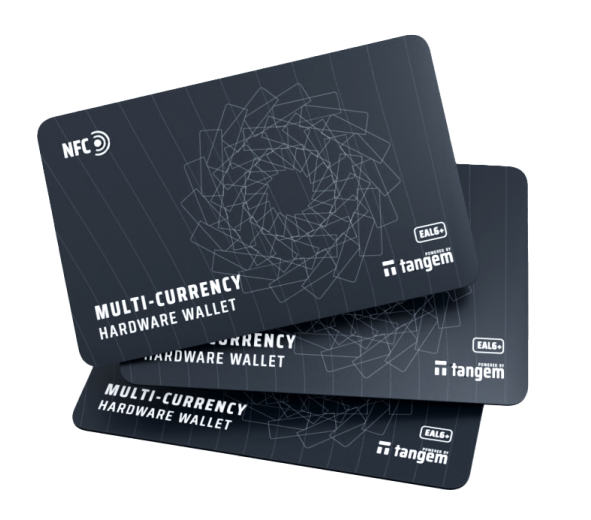
Where multi-currency support really matters
Supporting many assets isn’t just about recognizing coin tickers—it’s about correctly handling each chain’s cryptographic model. Some chains use ECDSA over secp256k1, others use Ed25519, and a few use entirely different signing schemes or multisig approaches, so the card’s secure element must either natively support multiple algorithms or offer a trustworthy abstraction. Initially I thought one chip could elegantly do everything, but then I dug into signature malleability, replay protection, and custom opcodes and realized that supporting broad parity requires either modular firmware or clever protocol wrappers. The best practical approach I’ve seen is a thin, well-defined signing API on the card combined with a companion app that knows chain specifics and presents a clear signing summary to users. Check the implementation and the documentation when evaluating any tangem hardware wallet; the link above points to a page that outlines these practicalities and helps you compare features and trade-offs.
Really? People underestimate UX errors. A hardware device can be mathematically secure and yet cause catastrophic losses because the UX misleads a hurried user. On one hand, confirmations and readable transaction details can prevent mistakes, though on the other hand, forcing long manual confirmations can push users toward unsafe shortcuts. My experience says that smart cards shine when they make the common path frictionless but the risky actions deliberately slower. I’m not 100% sure what’s the perfect balance, but I’ve watched both extremes fail in the wild.
Something else that bugs me: backup and recovery. Seed phrases are a pain and a liability in their own right. Smart cards provide an alternative model where the private key never leaves the secure element, and recovery might involve a second backup card or a hardware-backed migration flow. Initially the lack of a single seed phrase felt scary, but then I appreciated that seed phrases are often mishandled and that a properly designed multi-card backup approach can distribute risk. There are trade-offs—if you lose all cards and your backup plan is poor, you’re still out of luck—so plan redundancy thoughtfully.
Seriously, supply-chain trust is real. You can’t judge a hardware wallet solely by design diagrams; you must understand who manufactured the secure chip, whether the firmware is verifiable, and how the vendor handles updates. On one hand, small independent vendors can be nimble and transparent; on the other hand, they may lack the resources for thorough third-party testing. My instinct said to trust open-source firmware, but actually some closed-source products have stronger hardware roots and certifications, which matters depending on your threat model.
Whoa! Threat models differ wildly. You might be a casual hodler concerned about phishing, or a trader needing frequent, secure signing, or an institution requiring policy-controlled access. Each case favors different trade-offs in latency, scale, and auditability. Initially I grouped everyone together, but then I realized you need to choose a wallet type that maps well to your behavior patterns and organizational needs. Personal context matters more than brand hype—remember that.
I’ll be honest—there’s no perfect wallet. If someone promises a single device that covers every chain flawlessly with zero trade-offs, treat that claim with skepticism. On one hand, smart cards offer a strong blend of convenience and security for multi-currency users; on the other hand, they demand careful attention to backup patterns, firmware supply chains, and companion app security. My evolving take is pragmatic: pick a model you understand, minimize complexity, and test your recovery process before you store meaningful funds. Also, talk to the vendor about audits and certifications; paperwork matters when things go sideways.
FAQ
How does a smart card differ from a USB hardware wallet?
Smart cards are typically contactless, stateless signing devices with smaller attack surfaces and fewer active components, whereas USB wallets often include screens and more processing capability. That extra capability can improve on-device verification but also increases complexity. The card’s strength is simplicity and portability, which reduces some risks but introduces others related to physical custody and backup strategy.
Can a single smart card safely handle many blockchains?
Yes, but it depends on the secure element’s supported algorithms and the companion app’s implementation. A well-architected card exposes a minimal signing API while the app composes and verifies chain-specific transaction details, creating a practical and secure multi-currency solution. Always verify the vendor’s documentation and audit history before trusting significant funds.
